My dad is a truck driver: an AI agent with his own data

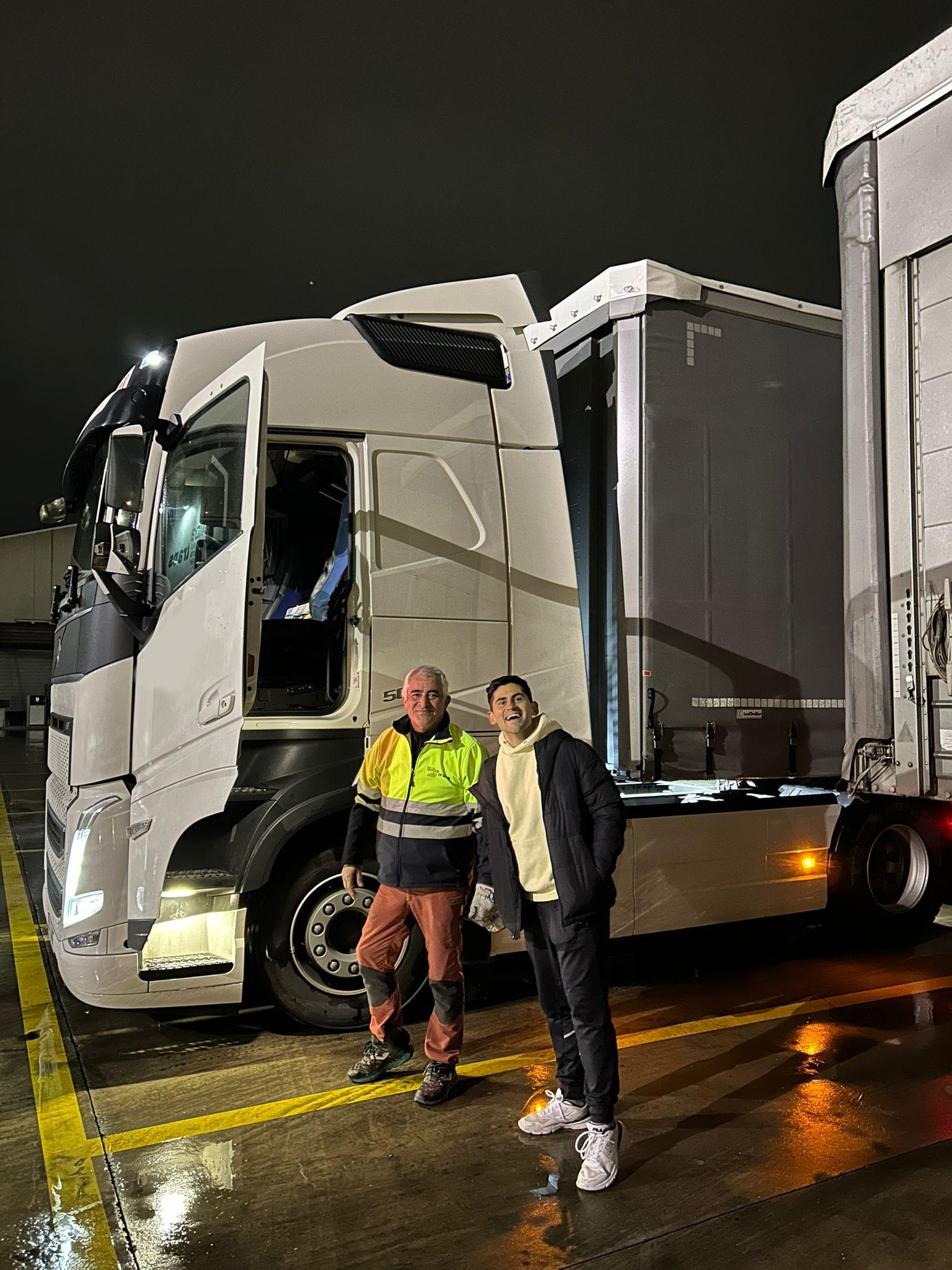
My dad is a truck driver, a born grafter. I've spent a long time trying to explain to him this crazy change AI is bringing us, but it wasn't until a few days ago, when I showed him what an agent can do with his own data, that he was blown away.
For anyone outside the sector, every truck carries a digital tachograph and every driver has a personal card that records everything, minute by minute: when they drive, when they work and when they rest.
As if the job weren't hard enough already (always away from home, accidents, unloading, tension, lack of sleep, the stress of not making it on time...), drivers are the ones responsible for keeping track of their driving and sticking to the rules to the letter: breaks, speed, rest periods, etc.
The rules are often not simple, and on top of that there are a lot of them.
→ Maximum 4h30 of continuous driving; after that, a 45-minute break. → 9 hours of driving a day, 10 only twice a week. → 11 hours of daily rest, which can be reduced to 9 at most three times between two weekly rest periods. → 56 hours a week, 90 in two weeks, a weekly rest of 45 hours, speed…
And so on for almost twenty more rules: manual entries when the card is removed, border crossings, rest periods on ferries, working time limits…
A whole lot of combinations and mental counting the driver has to keep in mind because, if not, the fine lands on them.
Fines that go from €100 to more than €4,000.
And that's not the worst part. The worst part is that constant worry:
Am I doing it right?
Being the geek I am, I was always curious about what that card stored and how the tachograph worked. We found out there are readers that let you download it and keep a copy. After all, the card is personal and the data belongs to the driver.
And that's when it clicked: what better way to explain to him what an agent is than putting it to work on his own data? Data he understands better than anyone and questions he could settle just by asking, in his own words.
I didn't even talk to him about prompts. A simple question was all he needed:
"Hi, I'm a freight transport driver. Here's the file with the data from my tachograph card. Could you tell me if I'm doing everything right?"
What happened next?
1) The agent decoded the file following the European technical specification for the tachograph. It pulled out six months of minute-by-minute activity, the vehicles used, almost 59,000 km and the GPS locations. It even checked that the coordinates matched the autonomous communities recorded.
2) It looked up the official penalty scale from the Ministry of Transport, downloaded it and extracted the bands and the amounts for each offence.
3) It coded an analysis that compares each working day against each rule: breaks, daily, weekly and two-week driving, and daily and weekly rest periods.
The result, in clear, natural language, the kind he understands:
✅ His week with the most driving: 43h55 (limit: 56h) ✅ All weekly rest periods, correct ⚠️ His tightest daily rest: 9h01, with a minimum of 9h. Legal, but with no margin.
His face was a picture.
Now he knows perfectly well what AI is for, because he saw the usefulness for himself. If he wanted, he could ask questions like:
Have I ever gone over the maximum permitted speed?
And the agent gave him an answer he understood.
Two conclusions I take away:
1) If you want to explain something to someone, use examples from their own domain: they'll understand it much better.
2) One more example of how artificial intelligence can bring real value to people, and of the huge amount of work ahead for us technical people in this digital transformation.
That night my dad slept better.
Tell me, any similar stories?
- AI
- Agents
- Automation
- ComplianceChecking
- RealWorldExperience
- KnowledgeSharing
- Communication
- Technology